



The short answer
Choosing the right relationship DNA test comes down to three questions: who is available to be swabbed, what the result will be used for, and how soon you need it. If the possible father can be tested, a paternity test is the most direct answer; if he cannot, a grandparent, avuncular (aunt or uncle) or siblingship test can answer the same question indirectly. If the result will be used in court, for child support, custody or a birth certificate, it must be a legal test with chain of custody.
- Legal paternity from $349 and personal (peace-of-mind) paternity from $299 use the same laboratory science — only the legal test is court-admissible.
- Siblingship, grandparent, avuncular and twin zygosity tests start from $399; prenatal paternity starts from $1,600.
- Adding the mother’s sample makes every indirect test stronger and is worth arranging whenever possible.
- Results are typically ready 2–3 business days after the laboratory receives the samples; every sample is processed at an AABB-accredited laboratory.
- Odosek collects at your home, office, hospital or attorney’s office across Columbia and the South Carolina Midlands, 24/7 by appointment.
Most people searching for a DNA test are not trying to learn about their ancestry. They have a specific family question — is he the father?, are we full or half siblings?, is this my grandchild? — and a deadline, a court date or simply a need for certainty behind it. This guide is a decision tool for that kind of relationship DNA test. It walks through each test Odosek offers, who needs to be swabbed, when a test must be legal, and the questions to ask before you book in Columbia, Lexington, Irmo or anywhere in the Midlands.
Consumer ancestry kits estimate ethnicity and match you with distant relatives in a company database. The U.S. National Library of Medicine explains how genetic ancestry testing works and its limits. Those kits are not designed to confirm a specific parent-child or sibling relationship, and they are not collected with the identity verification a court expects. Everything below is about relationship testing, not ancestry.
Why does choosing the right DNA test matter?
A relationship DNA test is a laboratory comparison of genetic markers between two or more people to measure how likely it is that they are biologically related in a specific way. Picking the wrong one rarely produces a wrong answer — it produces a weak or unusable one. There are three common ways that happens:
- It delays your answer. An indirect test run without the right relatives can come back inconclusive. The fix is to add another participant, and that restarts the clock. Our breakdown of how long DNA test results take shows how much of the waiting is avoidable logistics.
- It can affect a legal outcome. A personal test, or a home kit you swabbed yourself, cannot be used in court because nobody independent verified who gave each sample. If the result later needs to go before a Family Court judge, you will usually need to test again, legally.
- It wastes money. Paying for a peace-of-mind test and then a legal test for the same question costs more than doing the legal test once.
The decision is simpler than it looks: nearly every case is settled by who can give a sample and what the result is for.
What are the most common types of relationship DNA tests?
Odosek offers the full range of relationship tests used in family and legal cases. All of them use painless cheek (buccal) swabs except the prenatal tests, which use a blood draw from the mother. Here is what each one answers.
Paternity DNA testing: legal vs. personal
A paternity test compares the child’s DNA with the possible father’s to confirm or exclude biological fatherhood. It is the most direct and conclusive relationship test there is. It comes in two forms that use identical laboratory analysis:
- A legal paternity DNA test (from $349) adds photo ID checks, witnessed collection by a neutral collector, tamper-evident sealing and a documented chain of custody, so the report can be used for court, child support, custody, inheritance and birth-certificate matters.
- A personal, non-legal DNA test (from $299) answers the same question for your own knowledge. It is just as accurate but is not accepted as evidence.
Siblingship DNA testing
A siblingship DNA test compares two people to estimate whether they share both parents (full siblings), one parent (half siblings) or neither. It is often used when the father is unavailable and the children want to know whether they share him. Because siblings share a variable amount of DNA, results are reported as a likelihood rather than a near-certain yes or no, and including a known mother’s sample sharpens the answer considerably.
Grandparent DNA testing
When the possible father is deceased, unreachable or unwilling, his parents can stand in for him. A grandparent DNA test compares the child with the paternal grandparents to reconstruct the father’s genetic profile. Testing both grandparents gives a far stronger result than testing one, and adding the child’s mother strengthens it again. For many families this is the closest available substitute for a direct paternity test.
Avuncular (aunt or uncle) DNA testing
If the grandparents are not available, the possible father’s full brother or sister can be tested instead. An avuncular DNA test estimates whether that aunt or uncle is biologically related to the child. It is less conclusive than a grandparent test, so the mother’s participation matters even more.
Twin zygosity and prenatal paternity
A twin zygosity test swabs only the twins to confirm whether they are identical or fraternal. A non-invasive prenatal paternity test (from $1,600) establishes paternity during pregnancy by comparing fetal DNA circulating in the mother’s blood with a cheek swab from the possible father, with no risk to the pregnancy.
Gender reveal DNA testing
Odosek also offers early fetal sex testing. It uses a blood draw from the mother to detect cell-free fetal DNA. It is not a relationship test and does not answer any paternity question.
| Test | Question it answers | Who is tested | Price from |
|---|---|---|---|
| Legal paternity | Is he the biological father? Result usable in court | Possible father, child (mother recommended) | $349 |
| Personal paternity | Is he the biological father? For your own knowledge | Possible father, child (mother recommended) | $299 |
| Siblingship | Full siblings, half siblings or unrelated? | Both siblings (mothers recommended) | $399 |
| Grandparent | Is this the biological grandchild? (father unavailable) | Paternal grandparent(s), child (mother recommended) | $399 |
| Avuncular | Is this the father’s biological niece or nephew? | Father’s full sibling, child (mother recommended) | $399 |
| Twin zygosity | Identical or fraternal twins? | Both twins | $399 |
| Prenatal paternity | Who is the father, before birth? | Mother (blood draw), possible father (swab) | $1,600 |
Legal vs. personal use: which DNA test do you need?
Ask one question: could this result ever need to be shown to a court, an agency or a lawyer? If the answer is yes, or even maybe, choose a legal test. Legal testing is the standard for court-ordered paternity, child support, custody and visitation, adding or removing a father’s name on a birth certificate, and inheritance disputes.
What makes a test legal is not the laboratory but the paperwork around the collection. A trained, neutral collector checks each adult’s photo ID, photographs participants, witnesses the swabbing, seals the samples in tamper-evident packaging and documents every hand-off until the laboratory opens the kit. That documented chain of custody is what lets a court trust that the samples came from the people named on the report.
In South Carolina, paternity questions tied to child support often run through the SC Department of Social Services Child Support Services, which offers paternity establishment services; unmarried parents who agree on paternity can instead sign a Paternity Acknowledgement Affidavit. When a case is already before Family Court in Richland or Lexington County, see our page on court-ordered DNA testing in Columbia. For a side-by-side comparison of admissibility, cost and process, read legal vs. non-legal DNA testing.
If the result is purely for your own peace of mind and will never leave your family, a personal test is fine — it is just as accurate. Keep in mind that you cannot convert a personal result into a legal one later.
How many people need to be tested?
The number of participants shapes both which test you can run and how strong the result will be. Direct tests, such as paternity, compare a child with the one person in question and routinely produce conclusive answers. Indirect tests reconstruct a missing person’s DNA from relatives, so every additional relative adds information.
Why the mother matters: a child inherits half of their DNA from each parent. When the laboratory has the mother’s profile, it can identify which markers must have come from the father and compare only those. That is optional in a straightforward paternity case but can be the difference between a clear answer and an inconclusive one in grandparent, avuncular or siblingship testing. If relatives live in different places — one in Sumter, one in Orangeburg, one out of state — it may be possible to collect each person separately and combine the samples at the laboratory, so ask about this when booking.
What questions should you ask before booking a DNA test?
Five questions cover almost every case. Answer them before you call and the booking takes minutes:
- What exactly do I need to know? Fatherhood, sibling status, grandparentage or twin type — this picks the test.
- Who is available and willing to be swabbed? This decides whether you can test directly or need relatives.
- Could the result be used legally? If so, book a legal test with chain of custody from the start.
- Is there a deadline? A hearing date or a birth-certificate filing affects scheduling and whether to ask about rush processing.
- Which laboratory will process the samples? Ask whether it is AABB-accredited. AABB accreditation is the recognized quality standard for relationship testing laboratories. Odosek is a collection service; every sample goes to our AABB-accredited partner laboratory, and you can check any laboratory yourself in AABB’s accredited facilities directory.
Is the test for legal or personal reasons?
This single answer determines the collection method, the price and whether the report will be accepted. If you are working with a family law attorney, ask them before booking; attorneys can also arrange collections directly through our family law DNA program.
How quickly do you need the results?
Standard results are typically ready 2–3 business days after the laboratory receives all samples. Prenatal testing takes longer because fetal DNA must first be isolated from the mother’s blood. The biggest avoidable delay is on the front end — waiting for an appointment or for a participant to show up — so getting everyone swabbed at one visit is the fastest route.
Does location or mobility matter to you?
If a participant works long shifts, has limited mobility, is in the hospital or simply lives across the county, a mobile collection removes the hardest part of the process. Odosek collectors travel throughout Columbia, Lexington, Irmo, Cayce, West Columbia, Forest Acres, Blythewood, Chapin, Elgin, Camden, Sumter and Orangeburg, and to other communities listed on our South Carolina locations page.
How does mobile DNA testing fit into your decision?
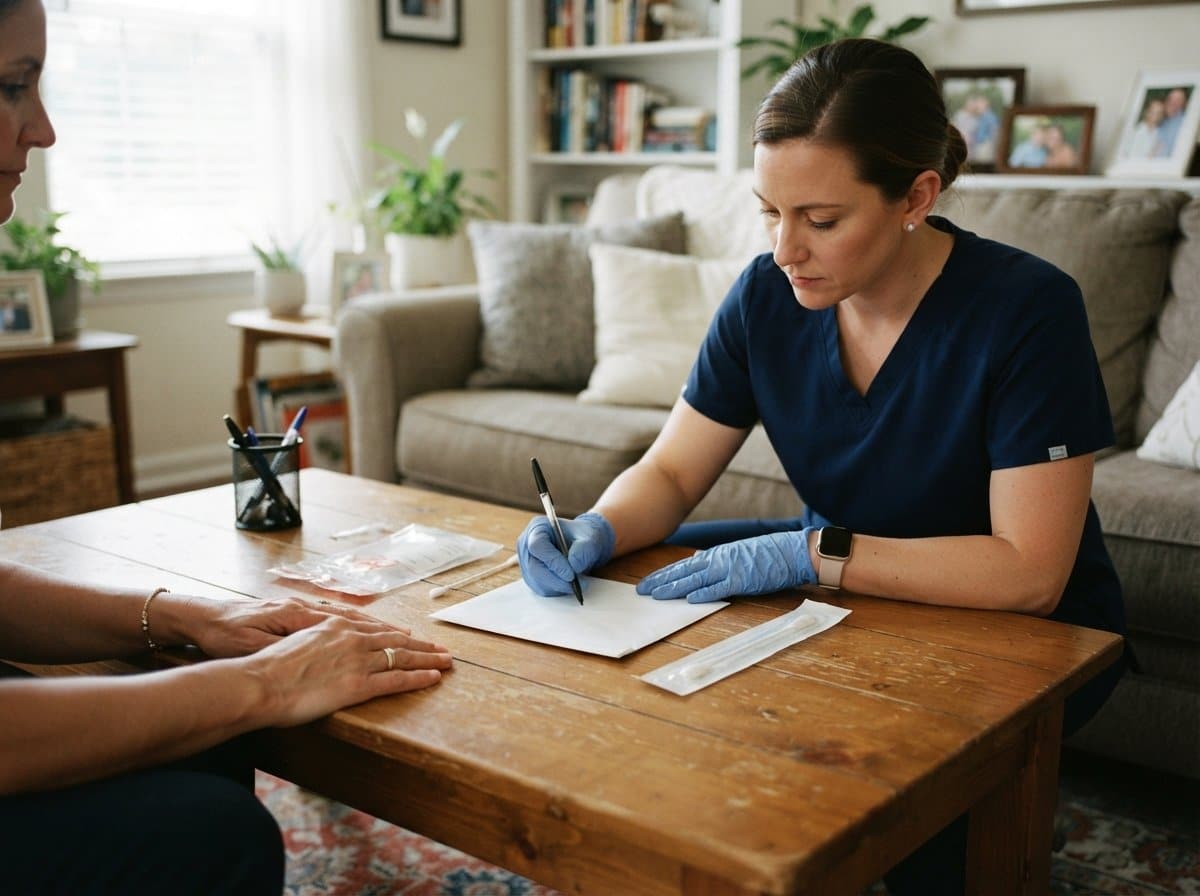
Mobile collection does not change which test you need; it changes how easily you can get it done. The swabs, the identity checks and the chain-of-custody paperwork are the same whether the collection happens in a clinic or at your kitchen table. What changes is that the collector comes to your home, office, hospital room or attorney’s office, at a time that suits every participant — including evenings and weekends, since Odosek operates 24/7 by appointment.
That matters most for multi-person tests. Getting a grandmother, an uncle, a mother and an adult child into one clinic during business hours is hard; getting a collector to a single living room is easy. Accuracy is identical because the laboratory analysis is identical — see how accurate mobile DNA tests are for the details. Odosek has served families in the SC Midlands for more than 17 years, is BBB A+ rated and handles personal information in a HIPAA-compliant way.
How do you get started with DNA testing through Odosek?
- Call or book online.Call (803) 766-0036 or use our online booking page. Tell us your question, who is available and whether you need a legal result.
- We confirm the right test.If your situation is not a straightforward paternity case, we help you choose between grandparent, avuncular and siblingship testing and suggest which extra participants will strengthen the result.
- A collector comes to you.Each participant gives a painless cheek swab. For legal tests, adults show photo ID and the collector completes the chain-of-custody forms.
- The laboratory analyzes the samples.Samples are sealed and shipped to our AABB-accredited partner laboratory.
- You receive your results.Results are released confidentially, typically 2–3 business days after the laboratory receives the samples.
For more local detail, see our DNA testing in Columbia, SC page.
Not sure which DNA test fits? Ask us first.
Describe your situation and we will recommend the right test and participants before you pay anything. Mobile collection across Columbia and the Midlands, 24/7 by appointment.
Frequently asked questions
What is the difference between a legal DNA test and a personal DNA test?
Both use the same laboratory analysis and are equally accurate. A legal test adds photo ID verification, a neutral witnessed collection and a documented chain of custody, so the report can be used in court, for child support, custody or a birth certificate. A personal test is for your own knowledge and is not accepted as evidence.
Can I get a DNA test if the other parent is not available?
Yes. If the possible father cannot be swabbed, his parents can take a grandparent test, his full brother or sister can take an avuncular test, or the children can take a siblingship test. The mother’s sample is not required for a paternity test, but adding it strengthens any indirect test.
How do I know which DNA test is right for my situation?
Start with who is available to be swabbed and what the result is for. If the possible father is available, choose paternity, legal or personal. If not, choose grandparent, avuncular or siblingship, in roughly that order of strength. If you are unsure, call and describe your situation before booking.
Can DNA tests prove family relationships other than paternity?
Yes. Siblingship, grandparent, avuncular and twin zygosity tests all measure specific biological relationships. They report a likelihood rather than the near-certain answer of a paternity test, which is why adding known relatives such as the mother makes the result stronger.
How much does a relationship DNA test cost?
At Odosek, personal paternity starts from $299, legal paternity from $349, siblingship, grandparent, avuncular and twin zygosity tests from $399, and prenatal paternity from $1,600. Additional participants can affect the final price, so confirm your case details when booking.
Are mobile DNA tests as reliable as tests done in a traditional lab?
Yes. Mobile collection uses the same cheek swabs and identity checks as a clinic, and the samples go to an AABB-accredited laboratory for analysis. Only the collection location changes, not the science.
How long does it take to receive DNA test results from Odosek?
Results are typically ready 2 to 3 business days after the laboratory receives all samples. Prenatal testing takes longer. Collection itself can often be scheduled the same day or the next day.
Is my personal information kept private when I take a DNA test?
Yes. Odosek handles personal information in a HIPAA-compliant way, and results are released only to the people authorized on the case, or to the parties named in a legal case.
What areas does Odosek Lab Solutions serve for mobile DNA testing?
In South Carolina we serve Columbia and the Midlands, including Lexington, Irmo, Cayce, West Columbia, Forest Acres, Blythewood, Chapin, Camden, Sumter and Orangeburg. Odosek also serves metro Atlanta and the Baltimore area; see our locations page.
Do I need a court order to get a legal paternity DNA test?
No. You can book a legal paternity test without a court order; what makes it legal is the chain-of-custody collection. A court or child support agency may order a test in some cases. This is general information, not legal advice, so check any specific requirements with your attorney or the court.
Odosek Mobile DNA & Drug Testing
Mobile collection at your home, office, hospital or attorney’s office — 24 hours a day, seven days a week.
Columbia & the Midlands
Metro Atlanta & northeast GA
Baltimore & surrounding counties
Family law collections with court-ready documentation
Notes
- Prices are Odosek’s consumer “from” prices; additional participants or rush processing can change the total. Turnaround is measured in business days from laboratory receipt of all samples.
- Odosek provides mobile collection and chain-of-custody services. Samples are processed at an AABB-accredited laboratory; Odosek itself is a collection service, not an accredited laboratory.
This article is general information, not legal advice. If your test relates to a court or child support matter, confirm requirements with your attorney, the court or SC DSS before booking.