Which drug test is right for you? The short answer
There are three main types of drug tests, and each one looks back over a different stretch of time. Urine typically shows use from the past few days and is the standard for workplace and DOT testing. Saliva (oral fluid) shows very recent use — generally hours up to a day or two. Hair shows a pattern of repeated use over roughly the past 90 days but cannot see the most recent week or so.
- Need a DOT-regulated test? It is a lab-based urine test under 49 CFR Part 40.
- Worried about use in the last day or two (post-accident, reasonable suspicion)? Saliva is the natural fit.
- Want a longer history for a safety-sensitive hire or a court matter? Hair gives the widest window.
- Instant screens give a preliminary answer in minutes; lab-based tests are confirmed at a SAMHSA-certified laboratory and reviewed by a Medical Review Officer (MRO) before a result is final.
- In Columbia and the Midlands, Odosek collects all three on-site — call (803) 766-0036.
Why choosing the right drug testing method matters
A drug test only answers the question it was designed to answer. A saliva test taken a week after an incident, or a hair test ordered to check what happened yesterday, can come back negative for reasons that have nothing to do with the person’s actual history.
The right method depends on three things:
- Who is asking. Employers, probation officers, family courts and parents need different things — and DOT-regulated employers do not get to pick at all.
- What time period matters. The detection window is the length of time after use that a drug or its metabolite can still be found in a specimen. It ranges from hours (saliva) to days (urine) to months (hair).
- How much certainty you need. An instant on-site screen is fast and inexpensive, but only a laboratory confirmation test with MRO review produces a result that holds up when a job, a license or a court case depends on it.
You also do not have to drive across Richland or Lexington County to a clinic. Odosek’s mobile collectors bring urine, hair and oral fluid collections to workplaces, homes and attorney offices across Columbia and the Midlands.
How urine drug testing works
A urine drug test analyzes a urine specimen for drugs and, more often, their metabolites — the compounds the body produces as it breaks a drug down. Metabolites usually linger longer than the drug itself, which is what gives urine its multi-day window. According to SAMHSA, urine is “the most rigorously evaluated and most commonly used matrix for drug testing.”
Testing is a two-step process:
- CollectionThe donor provides a specimen in a private restroom prepared by the collector (water colored, soap and tap access controlled). The collector checks the temperature within minutes, seals the cup with tamper-evident tape and completes a chain-of-custody form the donor initials.
- ScreeningAn immunoassay test — either an instant cup on-site or an automated screen at the lab — sorts specimens into negative and “presumptive positive.” Screens are fast but can cross-react with chemically similar substances.
- ConfirmationAt the laboratory, any presumptive positive is re-tested on a separate portion of the specimen using gas chromatography–mass spectrometry (GC/MS) or liquid chromatography–tandem mass spectrometry (LC-MS/MS), which identify the exact compound and its concentration.
- Specimen validity checksThe lab also tests for dilution, substitution and adulterants by measuring creatinine, specific gravity, pH and oxidizing agents.
How long do drugs stay in urine?
SAMHSA’s clinical guidance says most drugs are detectable in urine for roughly 2–4 days, with longer windows after heavy or chronic use. Approximate ranges from SAMHSA’s TAP 32, Clinical Drug Testing in Primary Care:
- Marijuana (THC metabolite): up to 3 days after a single use, up to 4 days for moderate use, up to 10 days for heavy use, and 30–36 days for chronic heavy use.
- Cocaine (benzoylecgonine): about 1–3 days at the common 300 ng/mL clinical cutoff; heavy repeated use can extend that.
- Opioids: codeine, morphine and hydrocodone about 1–2 days; the heroin-specific marker 6-AM clears within hours to a few days; methadone at maintenance doses 3–11 days.
- Amphetamines: about 24 hours after a single dose; 2–4 days after chronic high-dose use.
Treat those as estimates: dose, frequency, body fat, hydration, metabolism and the lab’s cutoff all move the numbers.
When is urine testing the best option?
Urine is the default for most programs: the science is well validated, confirmation methods are standardized and costs are moderate. It is usually the best choice for:
- Pre-employment screening and random testing programs, typically as a 5-panel or 10-panel test.
- Probation, treatment and court-ordered testing, where results must be defensible and repeatable over time.
- DOT drug testing. Safety-sensitive transportation employees are tested under 49 CFR Part 40. DOT authorized oral fluid as a second specimen type in 2023, but it cannot be used until HHS certifies at least two oral fluid laboratories, so DOT drug tests are conducted on urine today. Check the DOT Office of Drug and Alcohol Policy and Compliance for the current status.
Urine’s main weakness is tampering, which temperature checks, validity testing and, where rules require it, directly observed collection are designed to catch.
How hair follicle drug testing works
A hair follicle drug test looks for drugs and metabolites that pass from the bloodstream into the growing hair and become locked into the hair shaft. As the hair grows out from the scalp, it carries a rough timeline of use with it.
The collector cuts a small lock of hair — about the thickness of a pencil — as close to the scalp as possible, typically from the back of the head where it is least noticeable. The lab analyzes the 1.5 inches nearest the scalp. Because head hair grows at roughly half an inch a month, that segment represents approximately the past 90 days; SAMHSA notes that most laboratories analyze the amount of hair equivalent to three months of growth. If head hair is too short, body hair can often be used, though the window it represents is less precise.
The specimen is washed to remove surface contamination, then screened and confirmed by mass spectrometry for the drugs on the ordered panel.
What hair testing can and cannot detect
- It cannot see very recent use. Hair containing a drug has to grow above the scalp before it can be cut. SAMHSA puts the lag at about 7–10 days after use, so something taken last weekend may not appear in a hair test run this week.
- It is best at patterns, not single events. Repeated use over weeks leaves a stronger, more reliable signal than one isolated occasion, which may fall below the cutoff.
- It does not pinpoint dates. A standard 1.5-inch test reports whether use occurred during roughly the past three months, not which day.
- It is not a DOT specimen. Hair testing is outside 49 CFR Part 40, so it is used by non-DOT employers, family courts and private clients rather than for DOT-required tests.
How saliva drug testing works
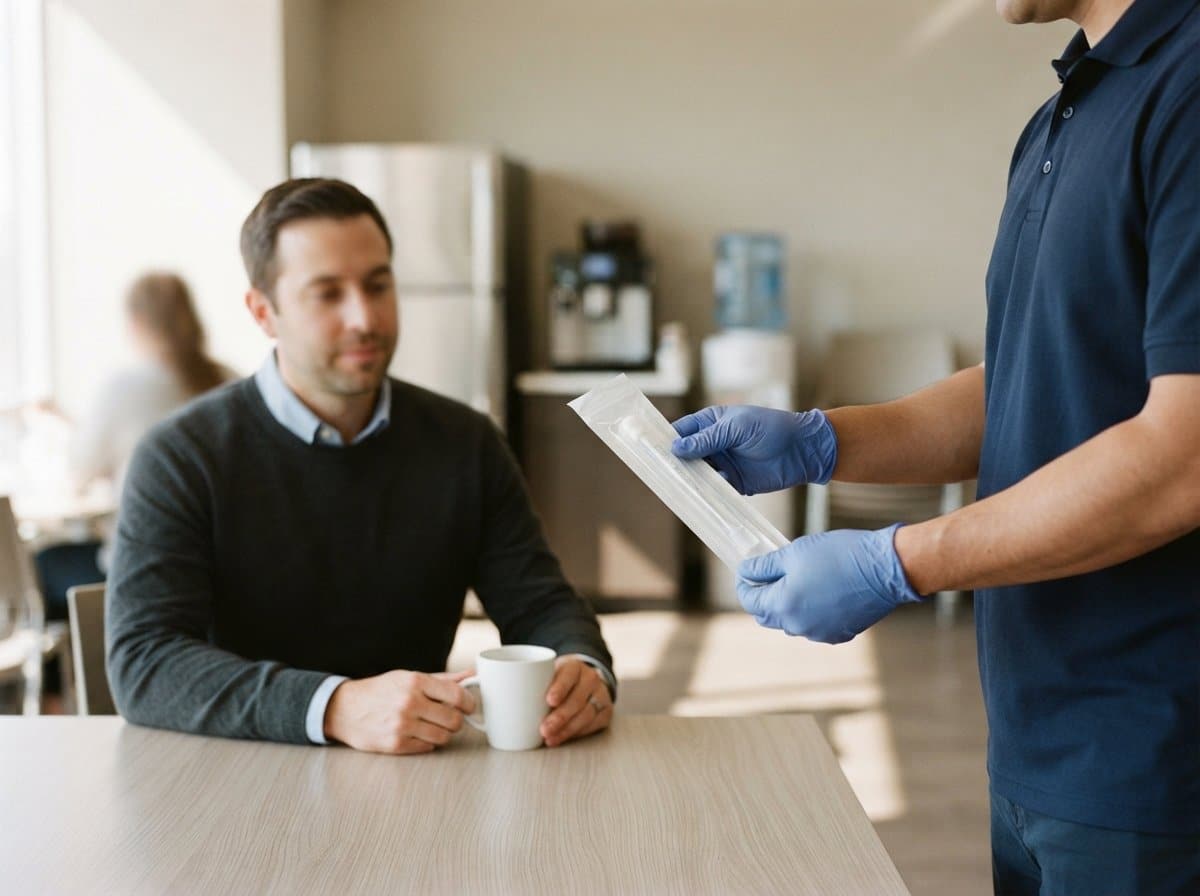
A saliva or oral fluid drug test — often called a mouth swab drug test — collects fluid from the mouth with an absorbent pad on a stick. The donor holds the pad in the mouth (or under the tongue) until an indicator shows enough fluid has been collected, usually a few minutes. The donor should have nothing in the mouth, including food, drink, gum or tobacco, for a short period before collection — clinical guidance calls for 10–30 minutes of supervision.
Oral fluid tends to contain the parent drug rather than a metabolite, which is why it reflects recent use. It can be read on an instant device or sent to a laboratory for confirmation.
SAMHSA describes the oral fluid window as measured in hours, shorter than urine. When DOT proposed oral fluid testing in 2022, the windows it cited from the scientific literature were up to 24 hours for marijuana and roughly 1–2 days for opioids, with somewhat longer figures for amphetamines and cocaine. Those figures vary with dose and study design, so the practical rule is simple: saliva is for the last day or two, not the last week.
Is saliva testing accurate and reliable?
Yes, when it is used for the right question and confirmed in a laboratory. Federal standards now exist: HHS published the Mandatory Guidelines for Federal Workplace Drug Testing Programs using Oral Fluid in October 2019, effective January 1, 2020, setting collection-device requirements, cutoffs and confirmation methods. DOT followed with its own final rule in May 2023. DOT itself notes that no single specimen type is perfect for every situation.
Where saliva shines:
- Post-accident and reasonable-suspicion testing in non-DOT workplaces, where the question is about the last few hours.
- “Shy bladder” or privacy concerns — observed, but never in a restroom.
Its limits: a short window, a small specimen volume, and possible contamination from drug residue in the mouth right after smoking. An oral fluid test is also not an impairment test. It indicates recent use, not whether a person was impaired at a particular moment.
Comparing urine, hair and saliva drug tests side by side
The chart below puts all three windows on one logarithmic timeline, since they range from hours to months.
| Urine | Hair follicle | Saliva / oral fluid | |
|---|---|---|---|
| Typical detection window | ~1–4 days for most drugs; up to ~30 days for chronic heavy marijuana use | ~7–10 days after use back to ~90 days | Minutes after use to ~1–2 days |
| Best at showing | Use in the past few days | A pattern of repeated use over ~3 months | Very recent use |
| Collection | Private restroom; a few minutes | Small lock cut near the scalp; a few minutes | Swab held in the mouth; a few minutes |
| Observed? | Usually unobserved; direct observation only in specific circumstances | Always observed | Always observed |
| Tamper resistance | Moderate — relies on temperature and validity checks | High | High |
| Common uses | Pre-employment, random, DOT, probation, court | Non-DOT pre-employment, family court, long-term history | Post-accident, reasonable suspicion, fast on-site screens |
| DOT-authorized? | Yes — the specimen used today | No | Authorized in rule; awaiting HHS-certified labs |
| Relative cost | Lower to moderate | Highest of the three | Lower to moderate |
If you are still not sure, the flow below captures how most programs decide. For exact pricing on any combination, use our drug test price calculator.
How Odosek’s mobile drug testing makes the process easier
Odosek has served the South Carolina Midlands for more than 17 years. In Columbia and the surrounding area — Lexington, Irmo, Cayce, West Columbia, Forest Acres, Blythewood, Chapin, Elgin, Camden, Sumter and Orangeburg — we run a full testing program: urine, hair follicle and oral fluid, 5- and 10-panel options, breath alcohol and EtG, for both DOT and non-DOT programs. That covers pre-employment, random, reasonable-suspicion, post-accident, return-to-duty and court-ordered testing.
- Request the testCall (803) 766-0036 or use the drug test request form. Tell us the reason for testing, the specimen and panel required, and how many people need testing.
- We come to youA trained, qualified collector arrives at your job site, office, home or attorney’s office with sealed collection supplies — 24/7 by appointment. Identity is verified and every specimen is sealed in front of the donor with chain-of-custody documentation.
- Results, reported confidentiallyLab-based specimens go to a SAMHSA-certified laboratory, and non-negative results are reviewed by a Medical Review Officer before they are reported. Results go only to the designated party — the employer’s representative, the court or agency, or you.
On-site collection keeps crews on the job and lets post-accident tests happen while the window is still open — see the benefits of onsite and mobile drug testing. Our full Midlands coverage is on the South Carolina locations page.
SAMHSA certifies laboratories, not collection companies. Odosek provides trained collectors and chain-of-custody handling; lab-based drug tests are analyzed at a SAMHSA-certified laboratory and non-negative results are reviewed by an MRO. Instant on-site screens are preliminary until lab-confirmed.
What to do after receiving your drug test results
Drug test results use specific vocabulary, and the words matter:
- Negative. No drugs were found at or above the cutoff. It does not prove a substance was never used — only that none was detected in that window.
- Non-negative (instant screen). A preliminary result. It is not a positive and should not be treated as one until the laboratory confirms it.
- Positive (verified). The laboratory confirmed a drug by mass spectrometry and the MRO found no legitimate medical explanation.
- Dilute, adulterated, substituted or invalid. A problem with the specimen itself, handled under the program’s rules — often a recollection, sometimes under direct observation.
The MRO interview
A Medical Review Officer is a licensed physician trained in drug testing. Before a laboratory positive is reported, the MRO contacts the donor to ask about prescriptions or other legitimate explanations. A valid prescription for an amphetamine-based ADHD medication, for example, can lead the MRO to report the result as negative. Under DOT rules, a donor can also ask for the split specimen to be tested at a second laboratory.
Next steps by situation
- Employers: act only on MRO-verified results, follow your written policy consistently, and keep results confidential. DOT employers must follow 49 CFR Part 40, including referral to a substance abuse professional and return-to-duty and follow-up testing.
- Legal and court cases: results go to the party named in the order. If a result affects custody, probation or a license, talk with your attorney.
- Individuals: you control who sees a personal test result; if it surprises you, ask about lab confirmation.
Frequently asked questions
What is the most accurate type of drug test available?
No specimen is the most accurate across the board. Accuracy comes from laboratory confirmation by GC/MS or LC-MS/MS plus MRO review, which is available for urine, hair and oral fluid. Choose the specimen by the time window you care about.
How far back can a hair follicle drug test detect drug use?
A standard test on 1.5 inches of head hair covers roughly the past 90 days. It will not usually detect use from the most recent 7–10 days, because that hair has not yet grown above the scalp.
Can a saliva drug test detect drug use from the previous day?
Often, yes. Oral fluid generally detects use within about the past day or two, depending on the drug, the amount used and the test cutoff. Marijuana tends to be at the short end, typically within about 24 hours.
Which drug testing method is most commonly used for employment screening?
Urine. It is the most widely used specimen for workplace testing and is the specimen used for DOT-regulated tests today.
How long does it take to receive results from a urine, hair or saliva drug test?
Instant on-site urine and saliva screens give a preliminary answer in minutes. Laboratory results take longer: negatives usually come back within a few business days of the lab receiving the specimen, while non-negative results take longer because of confirmation testing and the MRO interview. Hair generally takes longer than urine; we will confirm the expected timeline when you book.
Can I request a specific drug testing method when booking with Odosek?
Yes. In Columbia and the Midlands you can choose urine, hair follicle or oral fluid, plus the panel, as long as it is allowed by your employer policy or court order. DOT-regulated tests must follow 49 CFR Part 40. Odosek also serves metro Atlanta and the Baltimore area, where the available services differ — see all Odosek locations.
Are mobile drug test results as reliable as those done in a traditional lab?
Yes. The laboratory analysis is identical — mobile collection changes where the specimen is collected, not where it is tested. Lab-based specimens collected on-site are sealed with chain-of-custody documentation and analyzed at a SAMHSA-certified laboratory with MRO review, the same as a clinic collection.
Schedule a drug test in Columbia and the Midlands
Urine, hair and oral fluid testing on-site — DOT and non-DOT, 24/7 by appointment. Not sure which method you need? Call and we will help you choose.
Odosek Mobile DNA & Drug Testing
Mobile collection at your workplace, home, hospital or attorney’s office — 24 hours a day, seven days a week. HIPAA compliant, BBB A+.
Columbia & the Midlands — full drug-testing program
Metro Atlanta — instant on-site screens
Baltimore area — call to ask about drug testing
Contact our team about programs, pricing or scheduling
Sources and notes
- Urine and hair detection windows: SAMHSA, TAP 32: Clinical Drug Testing in Primary Care. All windows are broad estimates that vary with dose, frequency, metabolism and cutoff.
- Oral fluid: HHS, Mandatory Guidelines using Oral Fluid (84 FR 57554, 2019); DOT oral fluid final rule, 88 FR 27596 (2023).
- DOT procedures: 49 CFR Part 40; current program status from the DOT Office of Drug and Alcohol Policy and Compliance.
This article is general information, not legal or medical advice. Drug-testing services described here are offered in Columbia, SC and the Midlands; services in Georgia and Maryland differ by location.