

Pre-employment drug screening: the short answer
Pre-employment drug screening is the drug (and sometimes alcohol) test an applicant takes after a conditional job offer and before starting work. A good program runs the same way for every applicant in a job category: written consent, a documented collection, a SAMHSA-certified laboratory, Medical Review Officer (MRO) review and a decision based on written policy.
- Non-DOT rapid screens give a preliminary result in as little as 5 minutes; lab-confirmed, MRO-verified results typically take 24–72 hours.
- DOT-regulated applicants need a lab-based, verified negative pre-employment drug test before any safety-sensitive work, plus a Clearinghouse query for CDL drivers.
- Most employers start with a 5-panel or 10-panel urine test; per-test prices start at $65 for a 5-panel urine test.
- Applicants disclose prescriptions to the MRO, not to the employer.
- Background checks, MVRs and employment verification are separate parts of screening that you arrange with a background screening provider.
What is pre-employment screening, and where does drug testing fit?
“Pre-employment screening” is the umbrella term for everything an employer checks before a new hire starts. For most Columbia, SC employers that means a mix of the following:
- Drug and alcohol testing. The part Odosek Mobile DNA & Drug Testing handles: collection, lab coordination and result delivery.
- Criminal background checks, motor vehicle records (MVRs) and employment or education verification, run by a background screening company.
- For CDL drivers, the FMCSA Drug and Alcohol Clearinghouse query and, optionally, FMCSA’s Pre-Employment Screening Program (PSP) report on crash and inspection history.
We don’t run background checks, MVRs or verifications. If you’re shopping for employment screening services, most employers use one vendor for background reports and a separate collection provider for drug tests. This guide covers the drug and alcohol side.
Do employers drug test before hiring?
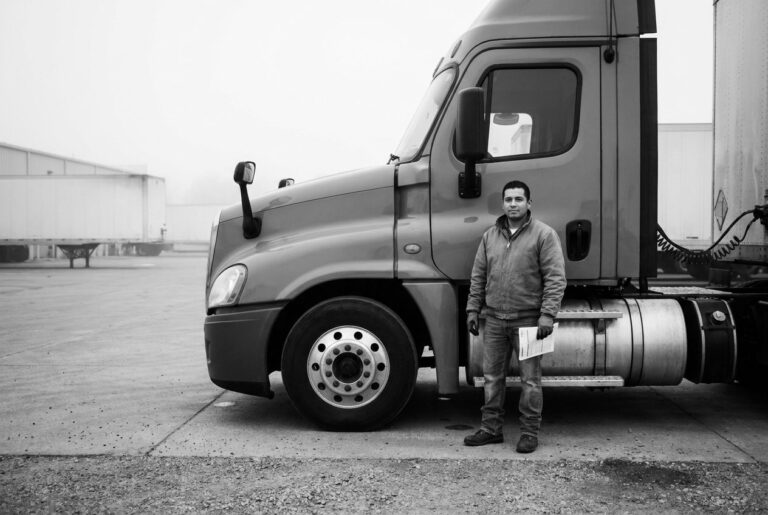
Many do, but it depends on the job. Private employers in South Carolina generally aren’t required by state law to drug test applicants, so for most jobs it’s a business decision written into company policy. The big exception is federally regulated transportation work: if the job is a DOT safety-sensitive position (CDL drivers, certain aviation, rail, transit, pipeline and maritime roles), a pre-employment drug test is required by federal rule.
Employers usually test when the role involves driving, machinery, patient care, children or customer homes, or when a client contract requires it. The policy should say which positions are tested, which panel is used and what happens with a non-negative result. Our guide to writing a workplace drug testing policy walks through those sections, and job seekers can find the applicant side in what employers and job seekers need to know about drug testing for employment.
What is the pre-employment drug screening process?
A repeatable workflow keeps hiring moving and gives you a clean record if a decision is ever questioned. Here’s the sequence most employers follow:
- Make a conditional offerState in writing that the offer depends on passing the drug screen (and any other checks in your policy). Testing after the offer also keeps you on the safer side of ADA timing rules for any alcohol test.
- Get written consentThe applicant signs your consent form and gets the time, place and ID requirements. Many employers set a 24- or 48-hour deadline.
- Schedule the collectionThe applicant visits a collection site, or a trained, qualified collector comes to your office, plant or job site. Bring a government photo ID.
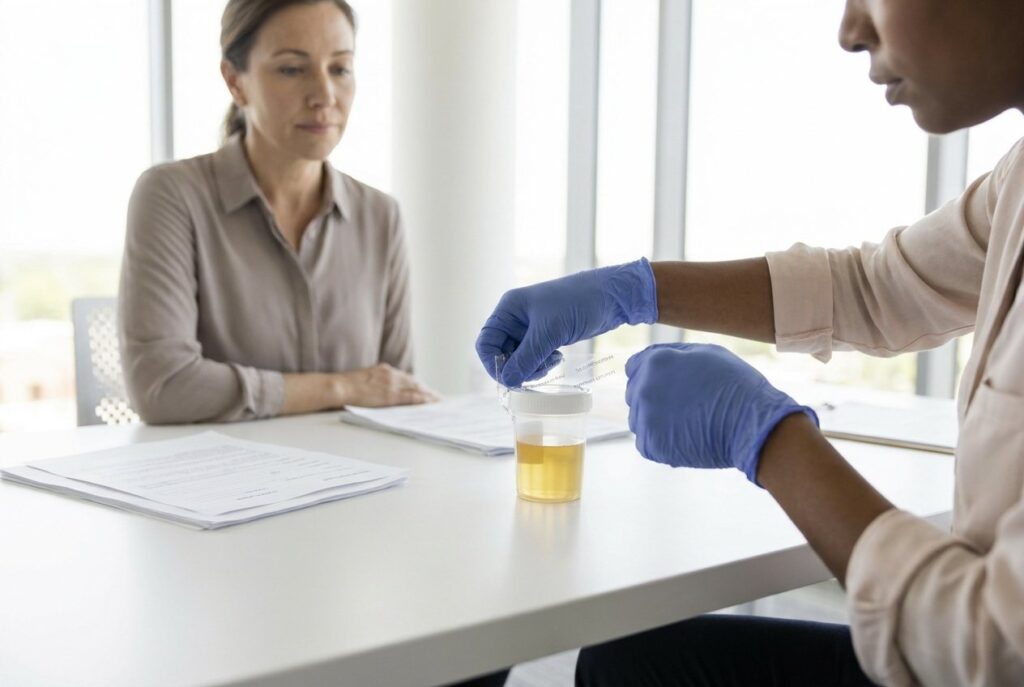
- Collect under chain of custodyThe collector seals and labels the specimen in front of the donor and completes a custody form, so the specimen can be traced from the cup to the lab.
- Screen and confirmA rapid screen reads a preliminary result on site, or the specimen goes straight to a SAMHSA-certified laboratory. Non-negative screens are confirmed by GC-MS or LC-MS/MS.
- MRO reviewA Medical Review Officer reviews confirmed non-negatives and contacts the applicant to check for a legitimate medical explanation, such as a valid prescription.
- Release the result and decideYou receive a verified result (negative, positive, dilute, refusal or cancelled) and apply your written policy the same way every time.
Our pre-employment drug testing service covers steps three through seven, with a standing account so recruiters can schedule applicants in one call.
Which panel and specimen should you choose?
Two choices drive cost and detection: the panel and the specimen. For most non-DOT hiring, urine is the default: well established, affordable and lab-confirmable.
| Specimen | Typical detection window | Best for | Starting price per test |
|---|---|---|---|
| Urine, 5-panel (lab) | About 1–3 days for most drugs; longer for regular marijuana use | Standard hiring, DOT-style panel for non-DOT jobs | $65 |
| Urine, 10-panel (lab) | About 1–3 days for most drugs; longer for regular marijuana use | Healthcare, security, roles with access to medications | $89 |
| Urine rapid/instant (5 or 10-panel) | Same as urine; preliminary result in as little as 5 minutes | Fast non-DOT hiring decisions, hiring events | $65 (5-panel), $95 (10-panel) |
| Oral fluid (9 or 10-panel) | Roughly 24–48 hours; best for recent use | Observed collection without a restroom, onsite events | $80 (9-panel), $99 (10-panel) |
| Hair (5 or 10-panel) | Up to about 90 days | Longer look-back for high-trust roles | $150 (5-panel), $225 (10-panel) |
| DOT 5-panel urine, full service | About 1–3 days for most drugs | DOT safety-sensitive applicants (required) | $87 |
Detection windows vary by drug, dose, frequency of use and person; treat them as general ranges. The oral fluid 10-panel does not include fentanyl. 12-panel and expanded panels are available; ask for a quote.
Do most employers use a 5-panel drug test?
The 5-panel is the most common starting point because it mirrors the federal DOT panel: marijuana (THC), cocaine, opioids, amphetamines (including methamphetamine and MDMA) and PCP. A 5-panel drug test suits most general hiring. A 10-panel drug test adds classes such as benzodiazepines, barbiturates and methadone, which matters more in healthcare and other jobs with access to controlled medications.
When does hair or oral fluid make sense?
Hair follicle testing looks back roughly three months, so it shows a pattern of use rather than the last few days. It answers a different question than urine and can’t show very recent use. Oral fluid testing is fully observed and hard to adulterate, which makes it practical for onsite hiring events, but its window is short.
What does pre-employment drug screening cost per hire?
Cost per hire is the test price, plus a mobile trip fee if a collector comes to you, plus GC-MS confirmation ($50 per specimen) only when a non-DOT screen is non-negative.
If a collector comes to you, the mobile trip fee is $75 during standard hours (Monday–Friday, 8am–5pm), $100 for extended hours (5–9pm), $150 after hours (9pm–7am), $135 on Saturday and $175 on Sundays and holidays. One trip fee covers the visit, so testing several applicants at once lowers the cost per hire. Build an estimate for your mix of panels with the drug test pricing calculator.
How is DOT pre-employment testing different?
If you’re hiring for a DOT-covered safety-sensitive role, the rules come from 49 CFR Part 40 and your agency’s own regulation (for trucking, 49 CFR Part 382). The main differences from a company-policy test:
- A verified negative comes first. The applicant can’t perform safety-sensitive functions until you have a verified negative pre-employment drug result, with only narrow exceptions written into the rules.
- Lab-based only. DOT drug tests use the Federal Custody and Control Form, a split specimen, a SAMHSA-certified (HHS-certified) laboratory and MRO review. Rapid screens are never used for DOT results.
- Fixed 5-panel. You can’t add drugs to a DOT test. If you want a broader panel, it has to be a separate non-DOT test under your own policy.
- Clearinghouse query. FMCSA-regulated employers must run a full query of the Drug and Alcohol Clearinghouse before a CDL driver performs safety-sensitive work. The driver has to grant consent inside the Clearinghouse, so ask them to register early.
- Prior employer history. Part 40 also requires a request for the applicant’s DOT testing history from previous DOT employers; check current FMCSA guidance on how this works alongside the Clearinghouse query.
- Alcohol is optional. FMCSA permits, but doesn’t require, pre-employment alcohol testing. If you do it, use a DOT evidentiary breath test (EBT) run by a certified breath alcohol technician, for every applicant.
See our DOT drug testing page for full-service DOT collections ($87), collection-only ($45), DOT breath alcohol ($60), and consortium membership for owner-operators and small fleets ($50 per year per employer).
How long does a pre-employment drug test take?
From the applicant’s point of view, there are three clocks:
- The visit. A routine urine collection usually takes 10–20 minutes after check-in. Applicants should bring a photo ID and avoid drinking large amounts of fluid, since a very dilute specimen can lead to a recollection. For DOT tests, a shy-bladder wait can last up to three hours.
- The preliminary result. A non-DOT rapid screen reads a preliminary result in as little as 5 minutes. A preliminary non-negative is not a final result; it goes to the lab.
- The verified result. Lab-confirmed, MRO-verified results typically take 24–72 hours. A confirmed non-negative can take longer if the MRO needs to reach the applicant for an interview.
Hair tests and all DOT tests are lab-based, so plan on the lab timeline for those. Our drug testing in Columbia runs 24 hours a day, 7 days a week, so a second-shift hire can test the same evening instead of waiting for an office to open.

What happens if an applicant fails a pre-employment drug test?
“Fail” covers several different outcomes, and each one should have a written response in your policy.
Confirmed positive
A verified positive comes from the MRO after lab confirmation and an interview opportunity. Most policies withdraw the conditional offer and may set a waiting period before the applicant can reapply. For DOT applicants, a verified positive or refusal is a DOT violation; the applicant must complete the return-to-duty process with a substance abuse professional before performing safety-sensitive work for any DOT employer, and for CDL drivers the result is reported to the Clearinghouse.
Preliminary non-negative on a rapid screen
Don’t make a final decision on a rapid screen. Send it for lab confirmation and MRO review; some turn out to be legitimate prescriptions.
Dilute specimen
A negative-dilute result means the specimen was more watery than normal. Many employers’ policies call for an immediate retest, and some DOT dilute results require a recollection under direct observation at the MRO’s direction. Pick one approach for non-DOT applicants and apply it to everyone.
Refusal to test
Missing the deadline, leaving before the test is complete, tampering or refusing the collector’s instructions can be treated as a refusal under your policy. For DOT tests, Part 40’s definitions apply, including special handling for a pre-employment applicant who leaves before the test begins. Document exactly what happened.
How do you keep pre-employment screening consistent and defensible?
Consistency is your best protection: test every applicant for a position the same way, at the same point, with the same panel. Keep:
- The signed consent and the written conditional offer.
- The custody form copy and the verified result from the MRO or collection provider.
- The decision you made and the policy section it relied on.
- Results kept separate from the personnel file, with limited access.
This is general information, not legal advice. Under the ADA, the EEOC treats a test for illegal drug use as not being a medical examination, but alcohol tests are medical exams and belong after a conditional offer. Applicants should disclose prescriptions to the MRO, not to the hiring manager, and you shouldn’t ask applicants to list their medications. South Carolina hasn’t legalized recreational marijuana as of this writing, and a positive THC result is treated as a positive under DOT rules regardless of any state law. State and local rules change, so check with your employment attorney before you finalize or change your policy.
If you don’t have a written policy yet, Odosek can provide a written South Carolina drug-free workplace policy ($125) and 2-hour supervisor training ($99). See our employer drug testing programs for how pre-employment fits with random, post-accident and reasonable-suspicion testing.
Can you screen a whole hiring class onsite in the Midlands?
Yes. For job fairs, seasonal ramps or a warehouse hiring a full shift, it’s faster to bring the collector to the applicants. A trained, qualified collector sets up a private collection area at your site and tests applicants back to back. Non-DOT rapid screens give preliminary results in as little as 5 minutes, with any non-negatives sent for confirmation.
Same-day mobile collection is available throughout the Midlands, including Lexington, Irmo, Cayce, West Columbia, Blythewood, Chapin, Elgin, Camden, Sumter and Orangeburg. Learn how it works on our onsite drug testing page. Odosek Mobile DNA & Drug Testing has served local employers for more than 17 years and holds a 5.0-star rating on Google.
Odosek Mobile DNA & Drug Testing — Columbia, SC
Mobile and onsite drug testing across Columbia and the SC Midlands, 24 hours a day, 7 days a week. Same-day collection is available throughout the Midlands.
1034 Wildwood Centre Dr, Suite B
Columbia, SC 29229
Columbia, Lexington, Irmo, Cayce, West Columbia, Blythewood, Chapin, Forest Acres, Elgin, Camden, Sumter, Orangeburg
Frequently asked questions
Does pre-employment screening mean I got the job?
Usually it means you have a conditional offer. Most employers test after the offer, and the job depends on passing the drug screen and any other checks in their policy.
Do most employers use a 5-panel drug test?
The 5-panel is the most common starting point because it matches the DOT panel: marijuana, cocaine, opioids, amphetamines and PCP. Employers in healthcare or jobs with medication access often choose a 10-panel.
Is hair drug testing more accurate than urine testing?
Not more accurate, just different. Hair looks back up to about 90 days but can’t show very recent use, while urine typically covers the last few days. Both are confirmed by a laboratory.
If an applicant passes an at-home test, will they pass a lab test?
Not necessarily. Lab tests use set cutoff levels, chain of custody, specimen validity checks and confirmation testing, so an at-home result doesn’t predict a lab result.
Will the employer see an applicant’s prescriptions?
No. The applicant discusses prescriptions with the Medical Review Officer. If there’s a valid medical explanation, the MRO generally reports the result as negative to the employer.
How long does pre-employment drug screening take overall?
The collection visit usually takes 10–20 minutes. Non-DOT rapid screens give a preliminary result in as little as 5 minutes, and lab-confirmed, MRO-verified results typically take 24–72 hours.
Can applicants in Columbia test at night or on weekends?
Yes. Odosek operates 24/7 with same-day mobile collection in its service area. Mobile trip fees are higher for evenings, overnight, weekends and holidays.
Set up pre-employment drug screening for your next hire
Tell us the positions, panel and hiring volume, and we’ll schedule collections at our Columbia office or send a collector to your site anywhere in the Midlands.
Sources
- 49 CFR Part 40: Procedures for Transportation Workplace Drug and Alcohol Testing Programs (eCFR)
- 49 CFR Part 382: Controlled Substances and Alcohol Use and Testing (eCFR)
- U.S. DOT Office of Drug and Alcohol Policy and Compliance
- FMCSA Drug and Alcohol Clearinghouse
- FMCSA Drug and Alcohol Testing Program
- SAMHSA Drug-Free Workplace resources
- EEOC: Preemployment Disability-Related Questions and Medical Examinations